Hydration and Health: How H2O Is the Unsung Hero of Maintaining Energy and Lifespan
Published on May 22, 2025
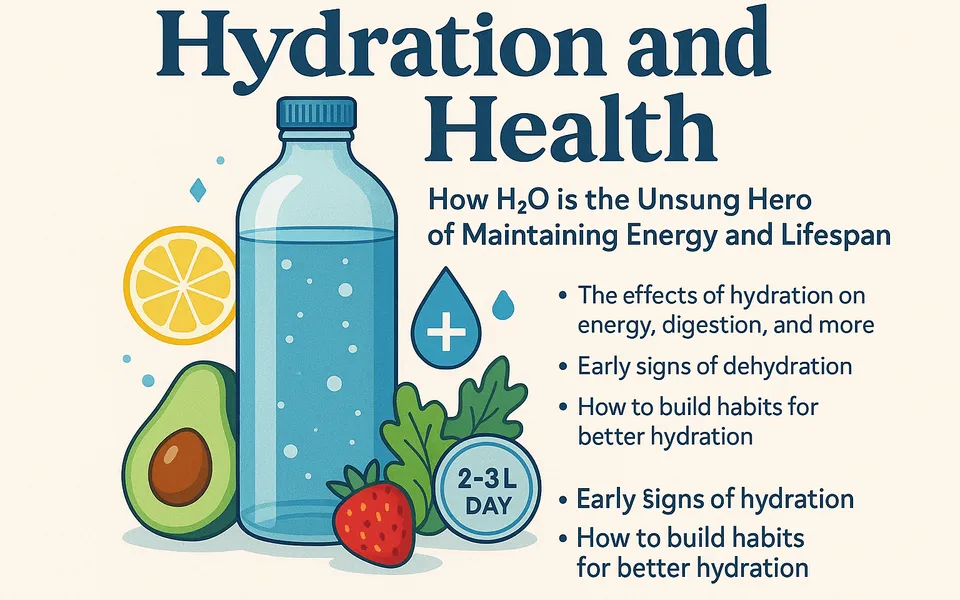
It can be easy to forget, but hydration truly is the cornerstone of virtually everything your body does — from digestion and cognitive performance to energy, fat metabolism, and detoxification.
This isn’t just about drinking 8 cups of water a day. This is about the science of hydration — how water supports cells, mood, metabolism, and what happens when it’s missing.
What you’ll learn in this article:
The effects of hydration on energy, mood, digestion, and detox
Why even slight dehydration causes surprise symptoms
How to time your water (and what to drink with meals)
Electrolytes and cell hydration
How to build hydration habits that last a lifetime
Based on insights from physiology, nutrition science, and Modern Nutrition in Health and Disease.
Why Hydrating Is More Important Than You Think
Over 60% of your body is water. It carries nutrients, flushes waste, lubricates joints, and regulates temperature. But it’s more than structural — it’s a performance regulator.
Even just 1–2% dehydration can reduce:
Focus and concentration
Physical endurance
Digestive efficiency
Mood stability
Chronic low-grade dehydration can lead to:
Constipation
Kidney stones
Fatigue
Brain fog
Joint pain
Premature aging
Early Signs of Dehydration People Ignore
Dehydration isn’t always a dry mouth. It shows up in subtle ways first.
Afternoon crash or low energy
Sugar cravings (often confused with thirst)
Headaches or feeling lightheaded
Dry skin or lips
Constipation and sluggish digestion
Brain fog or irritability
Water, Ions, and Cell Hydration
Hydration isn’t just about water. It’s about getting water into your cells — which depends on electrolytes.
Key electrolytes:
Sodium — fluid balance and water retention
Potassium — muscle and heart function
Magnesium — supports 300+ reactions, including energy
Calcium — nerve transmission and muscle contraction
Sweating, urination, and caffeine deplete electrolytes. Overhydrating without replacing them can lead to hyponatremia — dangerously low sodium levels.
Optimal hydration = water + electrolytes in balance
How Hydration Affects Energy, Metabolism, and Digestion
Energy production:
ATP (cellular energy) requires water
Dehydration impairs mitochondria and causes fatigue
Fat metabolism:
Lipolysis (fat breakdown) needs water
Less hydration = slower metabolic rate
Digestion & detox:
Water supports bowel movements and bile production
Flushes waste via kidneys and liver
Brain:
70% water
Even mild dehydration affects mood, memory, and focus
The Best Times to Drink Water
Morning (upon waking):
Rehydrates cells
Flushes toxins
Jumpstarts digestion and metabolism
30 minutes before meals:
Preps stomach
Reduces overeating by addressing thirst
During/after workouts:
Replaces sweat losses
Supports temperature regulation
Delivers electrolytes
Afternoon (instead of coffee):
Sustains energy
Supports kidneys and liver
Before bed (lightly):
Small sips prevent overnight dehydration
Avoid large amounts that interrupt sleep
Hydration Myths and Mistakes
Myth: 8 glasses per day
Truth: Needs vary by weight, climate, diet, and activity. Aim for half your body weight (lbs) in ounces.
Myth: Thirst is a good signal
Truth: Thirst kicks in after you’re already dehydrated — and can be muted in athletes and the elderly
Myth: Clear urine = hydrated
Truth: Pale yellow is best. Clear can mean overhydration and electrolyte loss.
Myth: Coffee and tea don’t count
Truth: In moderation, they hydrate — especially with food or additional water
Hydrating Foods That Count Too
Fruits and veggies are 80–90% water. Blending them into smoothies gives you water + fiber + micronutrients.
Top hydrating foods:
Cucumber
Watermelon
Oranges and citrus
Strawberries and blueberries
Celery
Lettuce, spinach, arugula
Zucchini and bell peppers
Bonus options:
Bone broth or herbal teas — hydrate + support gut/skin
Chia seeds — absorb water and form hydrating gel
Hydrating Drinks With Electrolytes
Coconut water — rich in potassium and magnesium
Homemade electrolyte water — sea salt + lemon + a touch of honey
Bottled mineral/spring water — natural electrolytes
Electrolyte powders/tablets — choose clean, sugar-free options for workouts, travel, illness
Daily Hydration Blueprint
7:00 AM — Large glass of lemon water
8:00 AM — Herbal tea + chia pudding with berries
10:30 AM — Refill bottle; sip 250–500mL
12:30 PM — Water and water-rich veggies before lunch
2:30 PM — Coconut or electrolyte water + snack
5:00 PM — Glass of water before dinner
8:00 PM — Herbal tea or sips of water if needed
Goal: 2–3 liters/day (70–100 oz) depending on body size and activity
Long-Term Benefits of Proper Hydration
You’ll feel the difference when hydration is consistent:
Fewer sugar cravings
Stable energy levels
Better digestion
Improved workout recovery
Clearer skin and eyes
Sharper brain function
Less joint pain
And over time, you’ll reduce risks of:
Kidney stones
Constipation and diverticulosis
UTIs
Cardiac strain and high blood pressure
Final Thoughts – Feed Your Cells, One Sip at a Time
Water isn’t background — it’s the base of your health strategy.
Every cell relies on peak hydration. When you hydrate with intention — including electrolytes, timing, and hydrating foods — you unlock energy, clarity, and resilience from the inside out.
So fill your glass.
Drink with purpose.
And raise a toast to a more vibrant you.